Preschool Shape Tracing: A Strategic Resource for Early Learning Success
In early childhood education, the tools you choose are rarely just about keeping children busy. Every resource carries a hidden strategic weight—shaping fine motor development, pre-writing confidence, and the way young learners approach unfamiliar tasks. Preschool Shape Tracing worksheets are one of those quiet, high-impact tools that can anchor a morning routine, bridge assessment gaps, or reinforce hand-eye coordination without feeling like work. When you receive a set of ten carefully designed tracing pages, you're not just getting paper. You're gaining a flexible asset that can shift how you plan, assess, and differentiate instruction over time.
The challenge, however, is that many educators and content creators treat shape tracing as a one-dimensional activity. They print, hand out, and move on. The real value emerges when you think about Preschool Shape Tracing as part of a larger instructional strategy—something that supports long-term penmanship goals, builds observational skills, and gives you reliable data on where each child is developmentally. This article explores how to use these ten page resources with intention, how to avoid common missteps, and how to align them with broader learning outcomes without adding extra workload.
Understanding the Core Strengths of Shape Tracing Worksheets
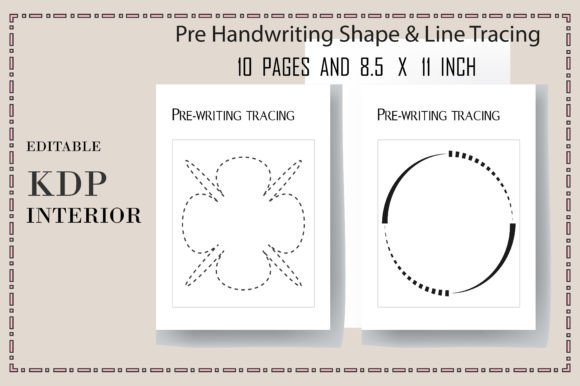
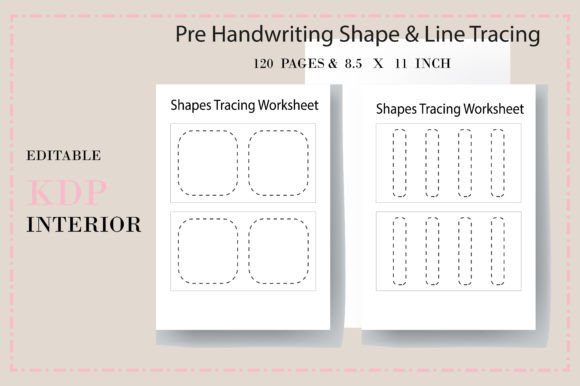
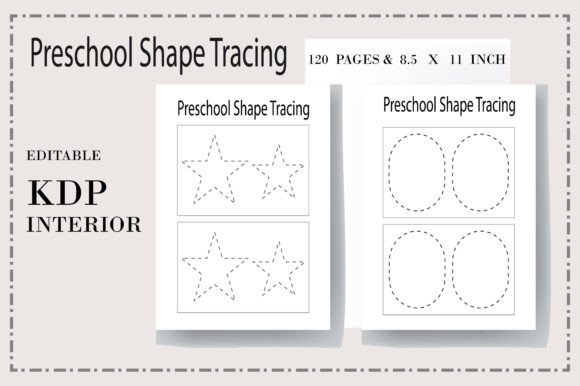
At first glance, tracing shapes seems simple. But beneath that simplicity lies a layered skill-building process. The ten page set typically features geometric forms like circles, squares, triangles, rectangles, ovals, stars, and hearts, progressing from basic to slightly more complex. Each page offers repetition, visual guidance, and room for independent effort. For a child, this means practicing pencil grip, learning to control starting and stopping points, and internalizing spatial relationships. For you—the educator, parent, or content creator—it means you have a systematic way to observe growth over consecutive days without designing new materials from scratch.
The format matters more than many realize. Dimensions of 8.5″ x 11″ keep the sheets familiar and printer-friendly, while a no-bleed design ensures clean margins and easy copying. The availability of both AI and PDF files gives you something else: adaptability. You can keep the PDF for instant, consistent printing, or use the editable AI source file to customize line thickness, add names, modify shapes, or localize content. This flexibility turns a static worksheet set into a scalable resource that can serve different classrooms, age groups, or branding needs if you're a publisher or creator.
When Tracing Becomes More Than Motor Practice
It's tempting to relegate Preschool Shape Tracing to a narrow lane: fine motor development. But if you use it only for that, you're missing its potential as a low-stakes assessment tool and a confidence builder. Every tracing attempt gives you evidence. Does the child start at the top? Do they rush through curves? Can they stay within dashed lines, or do they consistently overshoot? These observations, collected over a week of warm-up activities, can guide your decisions about who needs additional hand-strengthening exercises, who is ready for letter formation, and who benefits from more visual-motor integration tasks.
Moreover, early success with recognizable shapes can fuel a child's willingness to attempt writing letters and numbers later. When a preschooler masters tracing a circle and then sees that a “c” resembles that familiar curve, writing stops feeling threatening. This psychological bridge is often underestimated, yet it directly impacts long-term results in handwriting and creative expression. By positioning shape tracing as a stepping stone rather than a standalone drill, you give children a mental model: I can figure out new shapes by connecting them to what I already know.
Practical Integration: Planning Your Week Around a 10-Page Set
Without a plan, even the best resource can become busywork. To avoid that, consider how these ten pages might slot into different parts of your day or week. You might use one page each morning as a “morning work” or arrival activity, creating a predictable rhythm that reduces transition chaos. Because the sheets are consistent in format but vary in shape, repetition happens without staleness. By Friday, you'll have a clear progress snapshot.
Another approach is to use the worksheets as quick evaluations. Instead of relying on formal assessments that can make young children anxious, you can compare a child's triangle tracing from Monday to their triangle tracing after targeted instruction. The change—or lack of it—tells you more than a checklist ever could. This kind of embedded assessment keeps your instruction responsive rather than reactive.
For educators who run centers or stations, the ten pages can become a self-directed activity. Place them in a clear sleeve with dry-erase markers for repeated practice, saving paper and allowing children to self-correct. The no-bleed layout ensures that when you do print, nothing gets lost in margins, preserving every shape entirely. This small design consideration means less frustration for a child still learning spatial boundaries.
Customization as a Strategic Advantage
The editable AI source file included in many Preschool Shape Tracing sets is not just a bonus—it's an invitation to align the resource with your specific goals. Perhaps you need larger shapes for children with developing motor skills, or you want to add color-coded starting points to reinforce proper stroke direction. Maybe you're a publisher selling educational content and need to insert your logo, adjust fonts, or translate instructions. The ability to modify the original vector file means you're not locked into someone else's design choices. You can iterate without starting from zero.
This matters strategically because educational materials that can adapt over time reduce your long-term content creation load. Instead of buying new tracing sets every season, you modify what you already own. The same ten shapes can reappear months later with a different theme—fall leaves around the edges, a winter border—without sacrificing the core tracing practice. For small business owners and creators, this reusability lowers costs and increases the perceived value of your offerings.
Helping Students “Effortlessly” Practice Penmanship: What That Actually Means
The phrase “effortlessly practice penmanship” can sound like marketing, but it captures a genuine target: flow. When a task matches a child's developmental readiness, engagement spikes and resistance drops. The goal isn't to eliminate effort—it's to remove unnecessary friction. Well-designed shape tracing pages do this by providing clear, uncluttered paths. Too many decorative elements or confusing dashed lines can distract. The best worksheets keep it simple: bold outlines, gentle curves, age-appropriate size.
When children experience that flow, they're more likely to pick up a marker during free choice time and continue drawing shapes independently. That's where the real progress compounds. The ten pages thus serve as a springboard, not a ceiling. You can extend learning by having children find those shapes in the classroom, form them with playdough, or trace them in sand trays. The worksheet becomes a reference point—a concrete example they can recall when exploring more abstract spatial concepts.
Decision-Making: Should You Use Tracing Worksheets Every Day?
Frequency depends on your goals and the child. Daily use might be appropriate for a short two-week intensive, but overuse risks boredom or hand fatigue, especially if fine motor muscles tire quickly. A strategic rhythm might be three times a week, coupled with gross motor play that builds shoulder and core stability—essential foundations for controlled writing. Interspersing tracing with other pre-writing activities ensures you're not forcing a narrow skill at the expense of overall physical development.
Also consider the composition of your group. A classroom with a wide developmental range benefits from having the same set available at different levels of scaffolding. Some children will need hand-over-hand guidance; others may be ready to trace and then independently draw the shape below. The editable AI file lets you create variations: one with fewer dashed lines, one with a completed example to trace around, one with just a starting dot. Differentiating from the same core file saves prep time while respecting each child’s current ability.
Beyond the Classroom: Strategic Uses for Content Creators and Publishers
If you're a blogger, course creator, or small publisher, Preschool Shape Tracing worksheets can serve multiple business objectives. They work as lead magnets—an easy, high-perceived-value freebie that parents and teachers download in exchange for an email address. The editable format lets you brand them consistently, embed your domain subtly, and maintain visual coherence with your other products. Because shape tracing is evergreen content, a single well-designed set can generate leads for years, especially if optimized with relevant keywords and integrated into a content funnel.
For those building a paid product line, these ten pages can anchor a larger fine motor bundle. Add scissor skills sheets, line tracing, or letter formation practice, and you've created a comprehensive early writing curriculum. The initial investment in the editable source file pays for itself across multiple product iterations. You're not just selling worksheets; you're offering a system that busy parents and teachers can trust, which builds brand authority and repeat purchases.
Common Pitfalls When Using Shape Tracing Resources
Even high-quality materials can backfire if used without context. One risk is placing too much emphasis on perfect tracing at the expense of process. If a child senses that only exact lines matter, they may become hesitant, avoidant, or develop a perfectionist streak that stifles creativity. Tracing should be exploratory at first. Celebrate effort and improvement over flawless reproduction. The ten pages offer built-in repetition; you don't need to demand mastery on the first attempt.
Another pitfall is treating tracing as a substitute for multisensory learning. Shapes aren't just visual—they're tactile, spatial, and even auditory as you describe them (“a circle curves all the way around”). Supplement worksheets by having children walk the shape on the floor, form it with their bodies, or trace it in the air with large arm movements. This links the two-dimensional page to three-dimensional experience, deepening understanding far beyond what any worksheet alone can achieve.
Finally, avoid over-relying on digital files without testing print quality. Even with a no-bleed design, printer settings can alter line visibility or page alignment. Print one master, check clarity, and store a high-quality scan if you need to reprint often. A faint, broken dashed line frustrates children and undermines the purpose of the exercise. Simple quality control saves you from inadvertently creating a negative association with writing.
How to Measure Long-Term Impact of Consistent Tracing Practice
If you use Preschool Shape Tracing strategically, you should see transfer effects within weeks—not years. Children may start forming letters with more controlled strokes, show better pencil grip, or draw recognizable shapes from memory during free drawing. Document these moments. A quick photo note or a dated sample portfolio helps you track progress and communicate growth to families. When parents see a side-by-side comparison of a child's tracing in September versus December, they understand the value of sustained, intentional practice without needing data charts.
For program-level planning, anonymous aggregated observations can reveal patterns. Are most children struggling with diagonal lines? That might signal a need for more gross motor cross-body activities before pushing angled letters like “A” or “V”. This strategic view turns your ten page set into a diagnostic tool that strengthens your whole curriculum rather than just occupying a few morning minutes.
Practical Tips for Maximizing a 10-Page Shape Tracing Set
- Sequence thoughtfully: Start with circles and ovals, then squares and rectangles, then triangles and stars. Curves precede angles developmentally.
- Add a sensory element: Let children first trace the shape with their finger, then with a crayon nub, then with a pencil. Gradual tool changes build adaptability.
- Pair with oral language: As they trace, name the shape, count its sides, talk about its attributes. This reinforces vocabulary and cognitive connections.
- Create a “finished” ritual: Have children color their best traced shape and display it. Ownership increases engagement and gives you an informal assessment of visual-motor integration.
- Leverage the AI file: If you notice a child consistently struggling with a particular shape, isolate it on a separate page and enlarge it. The editable format makes this a two-minute task.
When to Move Beyond Tracing—and How to Do It Seamlessly
A sign that a child is ready to move past tracing is when they anticipate the line path, trace smoothly without frequent stops, and show interest in drawing shapes independently. At that point, continue using the worksheets as optional review or as a warm-up for freehand practice. You can lay a tracing page underneath a blank piece of paper on a light table or window; the faint impression guides without controlling. This bridges guided practice to independent creation.
For group settings, you might designate tracing pages as a choice activity rather than a requirement. Children who still need the support can opt in, while those ready for more challenge can use blank paper to draw shapes and then self-assess by comparing to the worksheet. This decision-making autonomy builds metacognitive skills early—kids learn to gauge their own needs, a habit that pays dividends throughout their education.
Final Strategic Thoughts: Treating Simple Resources as Serious Investments
It's easy to undervalue something as seemingly basic as shape tracing. But when you examine the design choices—no-bleed pages, editable source files, PDF convenience, 8.5x11 compatibility—you realize these details exist to serve real-world educators and creators who operate under time constraints and need materials that work reliably. By approaching Preschool Shape Tracing with clear goals, a plan for differentiation, and an eye on long-term skill development, you turn a simple set of ten pages into one of the most dependable tools in your early learning arsenal. Whether you're a teacher aiming to boost morning work efficiency, a parent building home learning routines, or an entrepreneur seeking evergreen content, intentional use of these worksheets can lift results without adding complexity. That's the measure of a truly strategic resource.