Navigating Inner Landscapes: What a Shadow Work Journal PDF Offers the Modern Explorer
Exploring the deeper layers of your mind often calls for more than a fleeting thought or a conversation with a friend. For many adults between 20 and 50, the search for self-awareness leads to structured tools that help untangle suppressed emotions, old patterns, and the parts of ourselves we rarely show. Among these resources, the Shadow Work Journal PDF has gained steady attention—not as a quick fix, but as a versatile, self-paced companion for personal inquiry. This article examines what this digital journal format brings to the table, how it compares with other shadow work approaches, and in which situations it may be most beneficial—or where it might fall short.
What Makes a Shadow Work Journal PDF Distinct
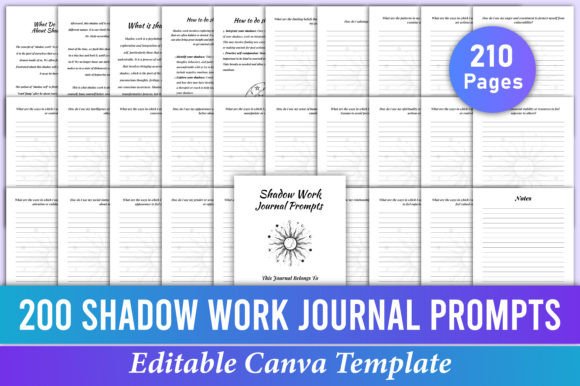
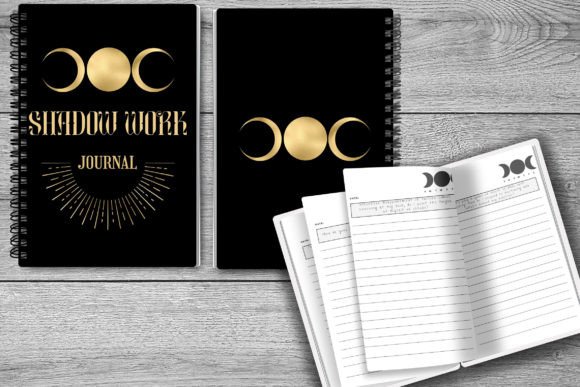
At its core, a Shadow Work Journal PDF is a downloadable, printable, or digitally fillable journal built around the concept of the “shadow self”—those hidden facets of our personality we often deny, judge, or remain unaware of. The origin of shadow work traces back to Jungian psychology, but the modern application is practical rather than purely clinical. The specific design described here includes 80 carefully crafted prompts that guide reflection across themes like fear, self-worth, resentment, shame, and unacknowledged desires. Unlike an open-ended blank notebook, each prompt serves as a doorway into a particular emotional territory.
What sets a digital PDF apart is not just the content but the delivery. You receive a file that you can print as many times as you need, reuse prompts over months or years, or fill out on a tablet with a stylus. There is no shipping, no waiting, and no one-time use—the resource stays with you. In an era where many people juggle travel, minimalism, or tight budgets, the format itself becomes a practical advantage.
How It Compares with Other Shadow Work Formats
Shadow work can take many forms. To understand where a Shadow Work Journal PDF fits, it helps to look at common alternatives and their tradeoffs.
Physical Printed Journals vs. Digital PDFs
Hardcover shadow work journals offer a tactile, screen-free experience that many find grounding. They often come with a fixed sequence of prompts, high-quality paper, and a sense of permanence. However, they are typically single-use; once you fill the pages, the journal is complete, and you cannot easily revisit a prompt without marking up what you already wrote. A Shadow Work Journal PDF flips this: you can print a fresh copy of a prompt anytime you want to revisit a topic without the visual clutter of previous answers. This repeatability supports cyclical personal growth—a critical need in shadow work, where insights evolve over time. The tradeoff? You lose the sensual quality of a bound book and must either print pages or use a screen, which some users find less immersive.
Guided Therapy Workbooks
Clinical workbooks designed by therapists often include more psychoeducational content, structured exercises, and recommendations for professional integration. They usually target specific conditions like anxiety, trauma, or codependency and can be deeply effective when used alongside therapy. A Shadow Work Journal PDF with broad, reflective prompts is less diagnostic and more exploratory. It does not assume a diagnosis or prescribe a treatment path. This makes it more accessible for generally self-aware adults who are not in crisis but want to deepen emotional intelligence. The limitation is clear: if deep unresolved trauma surfaces, a journal alone cannot provide the containment that a trained professional offers. In such cases, the PDF functions best as a supplement rather than a primary intervention.
Digital Apps and Subscription Platforms
Mood-tracking apps, AI-guided journaling tools, and subscription platforms offer interactivity, reminders, and data visualization. They can analyze writing patterns and suggest prompts. Yet many people feel uneasy about entering highly private shadow material into a cloud-based service. A Shadow Work Journal PDF allows completely offline, private engagement—perfect for those who want no analytics, no notifications, and no third party involved. The tradeoff is a lack of dynamic feedback. You are your own guide, which suits some temperaments but leaves others wanting more external structure.
Free Online Prompt Lists vs. Structured PDFs
Scattered across the internet are hundreds of free shadow work questions. They cost nothing but require effort to curate, often lack cohesion, and rarely follow a developmental arc. The value of a thoughtfully designed 80-prompt Shadow Work Journal PDF lies in its intentional sequencing and breadth. Prompts build upon each other, moving from lighter self-inquiry to deeper, more challenging themes. This scaffolding reduces the guesswork and keeps users from cherry-picking only comfortable topics. If you tend to abandon free resources halfway, a dedicated PDF can offer just enough structure to sustain momentum.
Strengths and Practical Benefits
When evaluating the resource, several strengths emerge that go beyond simple convenience.
- Reusability and longevity: Because you can reprint or duplicate the PDF, the journal grows with you. Use it once now, then again in a year to see how your inner landscape has shifted.
- Approachable scaffolding: The 80 prompts act as gentle nudges, breaking an abstract process into digestible reflections. This is especially helpful for beginners who feel overwhelmed by the idea of shadow work.
- Cost-effectiveness: Compared to multiple physical workbooks or ongoing app subscriptions, a one-time PDF purchase often delivers equal or greater volume of content for a lower long-term cost.
- Privacy and control: All your entries remain in your physical notebook or on your local device. You decide what to share and what never leaves your desk.
- Adaptable format: You can choose your own paper, use ring binders to rearrange prompts, or import pages to a digital note-taking app like GoodNotes or Notability. This flexibility supports different learning and processing styles.
Where the PDF May Not Be the Right Fit
No tool works for everyone, and honest evaluation calls for naming the situations where a Shadow Work Journal PDF might not meet your needs.
If you thrive on sensory experiences—the smell of paper, the weight of a bound book, a cover that feels sacred—a printable PDF can feel sterile. The act of printing and binding your own pages adds labor that some may find off-putting. Similarly, if you lack easy printer access or dislike writing on a screen, the format introduces friction.
Another consideration is accountability. A journal, no matter how well designed, cannot hold you to a practice. If you know you need external nudges, community support, or therapist involvement, a standalone PDF may become yet another unfinished download. People with a history of severe trauma or dissociative tendencies should also approach solo shadow work cautiously; a journal can surface content that requires professional processing.
Finally, those seeking a one-size-fits-all blueprint may find the open-ended nature of 80 prompts insufficient. Some learners prefer a more directive, step-by-step system with explicit exercises rather than exploratory questions. In that case, a more intensive workbook or a facilitated online program might serve better.
Deciding If a Shadow Work Journal PDF Aligns With Your Path
Making a thoughtful choice comes down to understanding your own preferences, goals, and constraints. Consider the following decision factors.
Your Relationship with Self-Guided Work
Self-directed learning and introspection require a fair amount of intrinsic motivation. If you’ve successfully completed other self-paced resources—online courses, personal diaries, habit trackers—you probably possess the discipline to benefit. The Shadow Work Journal PDF thrives in environments where you can carve out quiet time, unpressured by schedules, and where you feel comfortable with your own mind as the primary teacher. If that sounds like you, this format can unlock profound insights.
Integration with Other Practices
The journal rarely exists in a vacuum. Many users pair it with meditation, dream work, therapy, or creative expression. Since the PDF is modular, you can easily select a prompt that aligns with a theme emerging in your life—jealousy, grief, ambition, self-sabotage—and integrate it into your existing practice. This mosaic approach makes it a supportive resource rather than a standalone regimen.
Privacy and Comfort with Vulnerability
Shadow work invites you to write about things you may never say out loud. A key advantage of the PDF is that you retain full control. No platform stores your entries, no algorithm suggests what to think next, and you can destroy or archive pages effortlessly. For those who value absolute confidentiality, this can be the deciding factor over digital apps or group workshops.
The Volume and Scope of Prompts
Eighty prompts is not a trivial number. It allows for repeated engagement over weeks or months without feeling repetitive. A quick look at sample prompts can help you gauge whether the style resonates: some prompts ask you to recall childhood memories, others to complete sentences about hidden anger, and still others to converse with a younger version of yourself. The diversity keeps the work from stagnating, but if you prefer a narrower focus, you might want a journal that zeroes in on a single theme, such as attachment patterns or body image.
Making the Most of a Digital Shadow Work Journal
If you choose to go forward with a Shadow Work Journal PDF, a few strategies can elevate the experience from passive filling-in to genuine transformation.
First, decide on a consistent medium. Some people print the entire journal at a local copy shop, bind it, and treat it like a physical book. Others load it onto a tablet and handwrite responses with a stylus. Still, others type directly into a PDF reader on their laptop. Each method shifts the experience. Handwriting, research shows, often deepens emotional processing, but typing can be faster for those who need to move through heavy material quickly. Experiment and commit to what feels sustainable.
Second, set a gentle rhythm. Shadow work does not reward intensity as much as steady, honest engagement. One or two prompts per week often work better than bingeing in a single weekend, which can overwhelm the psyche. Reflect between prompts. Notice how your daily life shifts after exploring a part of your shadow.
Third, combine with grounding practices. After writing about difficult emotions, take a walk, stretch, or listen to calming music. This helps your nervous system integrate what surfaced without staying stuck in a vulnerable state. If a prompt stirs too much, step away and return later—or skip it entirely. The journal is a tool, not a taskmaster.
When to Consider an Alternative
While a Shadow Work Journal PDF serves many well, some scenarios call for a different approach. If you consistently hit emotional blocks that disrupt daily functioning, a therapeutic relationship likely provides greater safety. If you discover that you need interactive feedback, a structured online course with community forums might bridge the gap. If you simply cannot stand the digital format, a high-quality printed shadow work journal with similar depth would be a more natural fit. The goal is not to find the “best” tool in the abstract, but the one that actually meets you where you are.
The Bigger Picture of Personal Transformation
Ultimately, the value of any shadow work tool lies less in its format and more in the sincerity you bring to it. A Shadow Work Journal PDF offers a spacious, adaptable framework for the brave act of turning inward. It does not promise overnight change, nor does it replace human connection or professional care. What it does provide is a structured, private, and repeatable space to meet yourself more fully—including the parts you’ve hidden away. For the right person at the right time, that’s not just a product; it’s a doorway.
Choosing this resource over others depends on whether you value digital flexibility, reusable prompts, and self-paced exploration over physical tactility, external guidance, or interactive feedback. No single tool will carry the whole journey, but a thoughtfully crafted journal can be a reliable companion for long stretches of the path. As with any deep inner work, trust your instincts, start gently, and remember that every question you dare to ask yourself already moves you closer to authenticity.