700 Medium Hard Chess Exercises in One Move
Most chess players hit a wall somewhere between 1400 and 1800 ELO. Games feel winnable, positions look promising, but the decisive tactical shot never quite lands. That gap between seeing a good move and finding the crushing move is where ratings stall. This collection of 700 medium hard chess exercises 1 move targets exactly that problem—training your eye to spot winning tactics instantly, without the luxury of unlimited time or engine assistance.
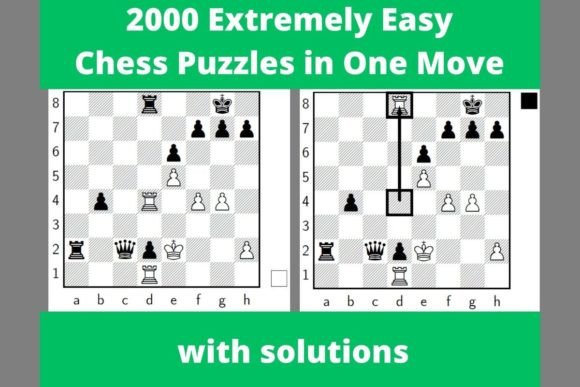
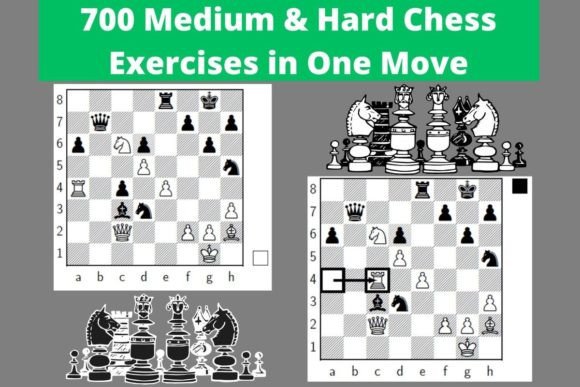
The package includes two PDF files packed with 700 puzzles, all presented as clean diagrams. Every exercise demands a single move to gain a decisive advantage, checkmate, or win material. Solutions accompany each puzzle, so you can verify your reasoning immediately. The difficulty climbs from medium (roughly 1500 ELO) to hard (around 2000 ELO), mirroring the tactical complexity you would encounter in club tournaments and serious online play.
Why One-Move Puzzles Deserve More Respect
Beginners often dismiss one-move exercises as trivial. Experienced players know better. The difference between spotting a tactic in 2 seconds versus 20 seconds can swing an entire tournament game. 700 medium hard chess exercises 1 move forces pattern recognition under realistic mental pressure. You are not calculating five-move combinations. You are training the instinctual part of your chess brain—the part that fires during time scrambles and blitz games when deep calculation is a luxury you cannot afford.
Many tactical training resources jump straight from simple fork-and-pin exercises to complex combinations. This collection fills the neglected middle ground. Puzzles at the 1500–2000 ELO range rarely appear in beginner books, yet they represent the exact tactical themes that decide games at the amateur and intermediate club level: subtle deflection sacrifices, quiet preparatory moves, zwischenzugs that transform equal positions into winning ones.
Who Gets the Most from This Collection
The sweet spot covers several types of chess enthusiasts:
- Club players stuck between 1400 and 1800 who lose too many games to missed tactics
- Online blitz and rapid specialists who need faster pattern recognition under time pressure
- Chess coaches and educators building lesson plans around tactical themes
- Content creators looking for ready-to-use puzzle diagrams for videos, blogs, or social media
- Self-publishers and print-on-demand sellers seeking puzzle content for books and workbooks
Self-study is the intended format. You should already understand castling rules, en passant, piece values, and basic checkmating patterns. The puzzles do not teach fundamentals—they sharpen the tactical eye of someone who already knows how the pieces move.
The Digital Format and What It Enables
This is a PDF download, not a physical product. Nothing ships to your door. After purchase, you receive two files you can print on standard 8.5 x 11 inch or A4 paper using any home printer. There is no limit on reprints. If you want to work through the puzzles once with pencil marks and then circle back months later with fresh sheets, you can. If you run a chess club and need handouts for ten members, you can print ten copies without additional fees.
The commercial license extends this flexibility further. You may use these puzzles in products you sell, including print-on-demand platforms like Kindle Direct Publishing. For bloggers, course creators, and chess educators building paid resources, having a legally cleared set of 700 diagrams eliminates the tedious work of sourcing or creating puzzles from scratch. You can focus on presentation, commentary, and branding while the puzzle content itself is ready to deploy.
Personal Training and Rating Improvement
The most straightforward use is daily tactical drilling. Set aside 15 minutes, work through 20 puzzles, and check your answers immediately. Do not guess. Sit with each diagram until you are certain of the winning move. Write it down. Only then consult the solution. This deliberate practice builds the neural pathways that fire during actual games. Over weeks, you will notice threats faster, calculate with more confidence, and blunder less.
Many users print the puzzles and carry a small batch in a bag or notebook. Solving away from a screen reduces the temptation to click around aimlessly or peek at solutions prematurely. The tactile experience of circling squares and drawing arrows on paper engages spatial reasoning differently than tapping a phone screen.
Teaching and Coaching Tool
Coaches can select puzzles by theme—discovered attacks, clearance sacrifices, deflection tactics—and assign them as homework between lessons. Because difficulty is progressive, you can match puzzles to a student's current level and gradually introduce harder positions. The diagram-only format means students practice reading positions from printed notation or visual memory, a skill tournaments demand.
Content Creation and Publishing
Bloggers, YouTubers, and chess streamers can pull diagrams into their content without worrying about copyright claims. A single puzzle makes a strong social media post. A curated set of 50 puzzles forms the backbone of a tactical e-book. Print-on-demand sellers can design workbooks around the puzzles, add instructional commentary, and list them on Amazon KDP. The commercial terms explicitly permit this, which is unusually generous for puzzle collections and worth noting if you build digital chess products.
Classroom and Workshop Settings
Educators running chess programs in schools or community centers benefit from the unlimited printing permission. You can produce puzzle sheets for entire classes, run timed tactical challenges, or create a progressive curriculum where students advance through difficulty tiers. The medium-to-hard range suits secondary school students and adult learners who have moved past the basics.
What Makes These Puzzles Different from Free Alternatives
Free online tactics trainers exist. So do apps with thousands of puzzles. The difference here comes down to curation, difficulty targeting, and ownership. Algorithmic puzzle generators sometimes produce positions that feel artificial or lack instructive clarity. A curated set of 700 medium hard chess exercises 1 move offers a consistent difficulty curve and deliberately chosen tactical motifs. Every puzzle was selected to teach something specific, not randomly generated by an engine evaluating stock positions.
Ownership matters too. Downloaded PDFs work offline, require no subscription, and never run ads between puzzles. You control the printing, the pacing, and the environment. For people who already spend too much screen time for work, solving chess puzzles on paper offers a welcome analog break that still sharpens the mind.
Realistic Observations from Active Users
Experienced players who have worked through similar puzzle collections note a few patterns worth considering before you start. First, consistency outperforms intensity. Solving 10 puzzles daily for two months yields better retention than cramming 50 puzzles in a weekend. Tactical vision builds slowly, like a physical reflex, not like memorizing opening lines.
Second, medium puzzles near the 1500 ELO range can feel surprisingly subtle. Do not rush through them assuming they are easy. Some one-move wins are quiet positional moves—a rook sliding to an open file with a hidden tactical justification, or a pawn push that creates an unstoppable threat on the next turn. The move itself is simple. Seeing why it works can be anything but.
Third, hard puzzles approaching 2000 ELO will humble even strong club players. If you miss several in a row, treat it as diagnostic information, not failure. Those missed puzzles highlight the specific tactical patterns your brain still overlooks. Revisit them deliberately.
Integrating the Exercises into a Broader Study Routine
Tactics alone do not make a complete chess player. Pair puzzle work with annotated game study, endgame practice, and regular playing. The tactical sharpness you build here will surface during games, but only if you also develop the positional understanding to steer positions toward tactically rich imbalances.
A practical weekly plan might include three tactical sessions using these puzzles, two slow games with post-game analysis, one endgame drill, and one session reviewing master games in your opening repertoire. The 700 medium hard chess exercises 1 move slot into the tactical sessions, rotating through sections as the difficulty rises.
Printing, Organization, and Long-Term Use
Since you can print unlimited copies, consider organizing the puzzles into batches. Print 50 at a time. Keep solved sheets in a folder with notes on which types of tactics gave you trouble. Over months, you create a personal training log that reveals patterns in your tactical weaknesses—perhaps you consistently miss deflection ideas but spot forks instantly. That self-knowledge guides further study.
Some users laminate printed sheets and use dry-erase markers for repeated practice, especially in classroom settings where materials need to survive multiple groups of students. Others bind printed pages into a workbook format using simple comb or spiral binding from a local office supply store. The PDF format supports whatever physical organization suits your workflow.
Who Might Look Elsewhere
If you are a complete beginner still learning how knights move or what castling achieves, these puzzles will frustrate you. Start with foundational tactics resources first. If you already hold a stable 2100+ ELO rating, the hard puzzles may still offer useful warm-up material, but the collection's primary value lives in the 1500–2000 range. Grandmasters and strong masters will find limited challenge here. For the vast middle of the chess-playing population, the difficulty sits exactly where it needs to.
People who strongly prefer interactive digital solving with instant move-entry feedback might initially find printed diagrams less engaging. The trade-off is deeper focus. Writing down answers forces commitment before checking solutions, which mirrors tournament conditions more accurately than clicking arrows on a screen that immediately tells you whether you are right or wrong.
The 700 medium hard chess exercises 1 move collection fills a specific, valuable role. It is not a comprehensive chess course. It is a targeted tactical drilling tool for intermediate players who want to stop missing winning moves in their games. Combined with deliberate practice habits and a willingness to sit with difficult positions until clarity arrives, it can help push a stagnant rating upward. Whether you use it for personal improvement, teaching, or commercial publishing, the combination of curation quality, flexible licensing, and offline accessibility makes it a practical investment for serious chess learners.